


Welcome back to our Diablo Lore Bites series, where we break down important Diablo lore topics in a simple, easy-to-read way. These are not massive lore dumps, but short, easy-to-digest bits that give you the context you need. No homework required. Just enough to understand who is who and what matters, especially if you never paid much attention to the story before.
This time, we are looking at the three Prime Evils, the main forces behind most of the chaos in the Diablo universe.
Where The Prime Evils Came From
Long before Sanctuary existed, there was a single being born from the void, called Anu, a perfect entity that embodied all things. Anu eventually rid itself of its own evil, and that cast-off darkness became Tathamet, a massive seven-headed dragon.
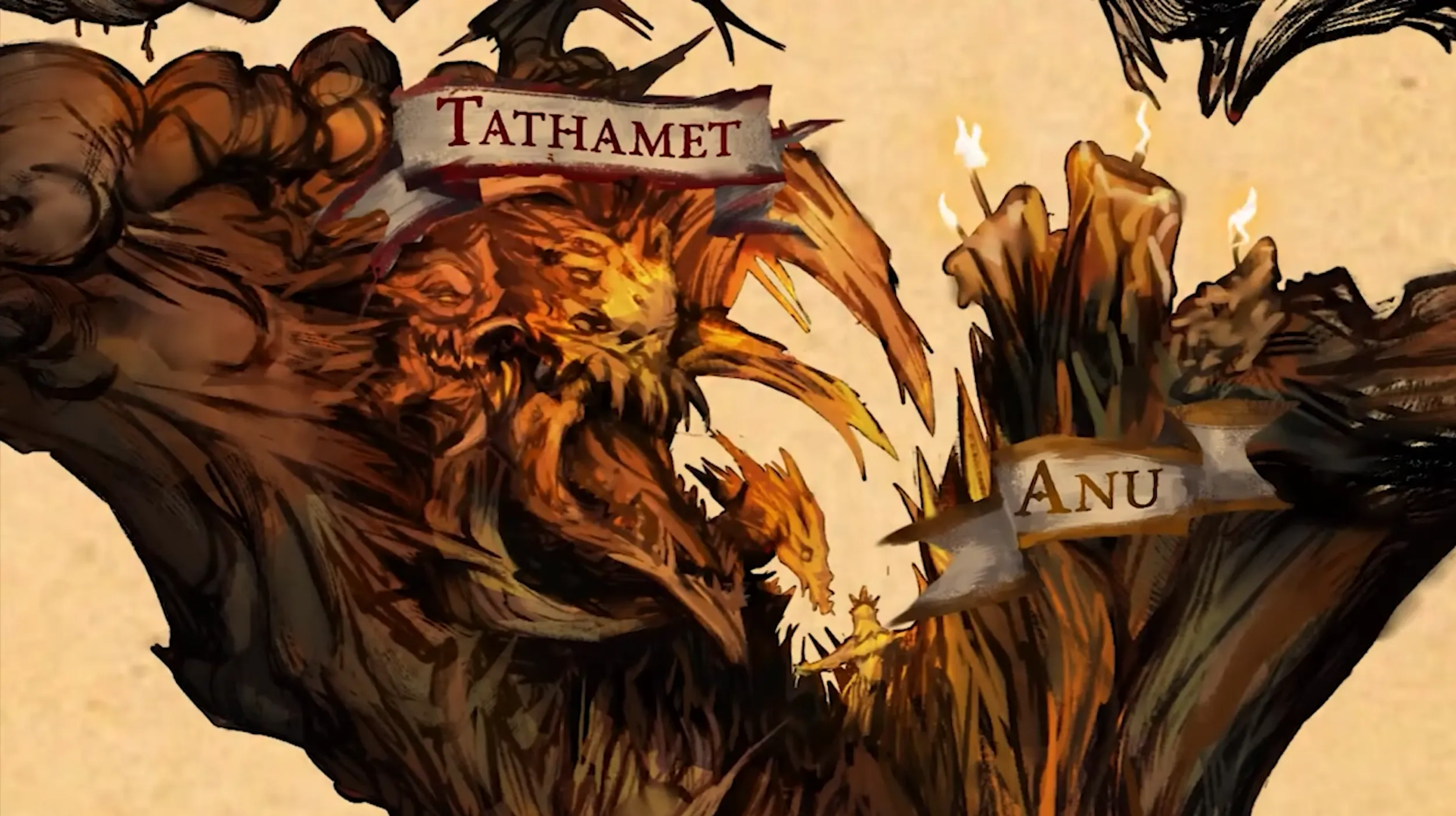
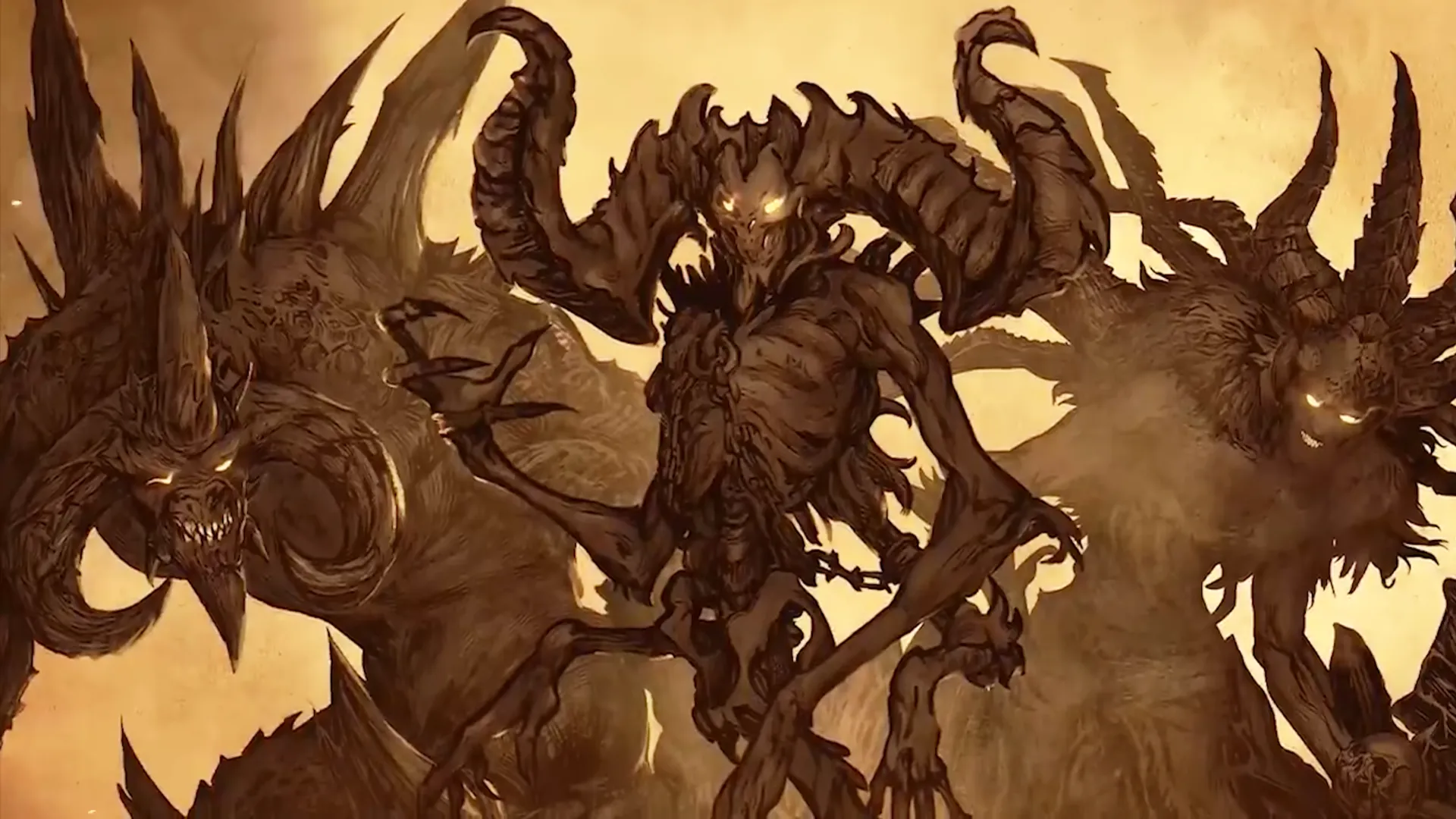
Anu and Tathamet fought, and both destroyed each other in the process. From Anu’s remains came the High Heavens, while Tathamet’s corpse became the Burning Hells. His seven severed heads then gave birth to the seven Great Evils. Four of these were later known as The Lesser Evils, and above the rest, rose the Three Prime Evils:
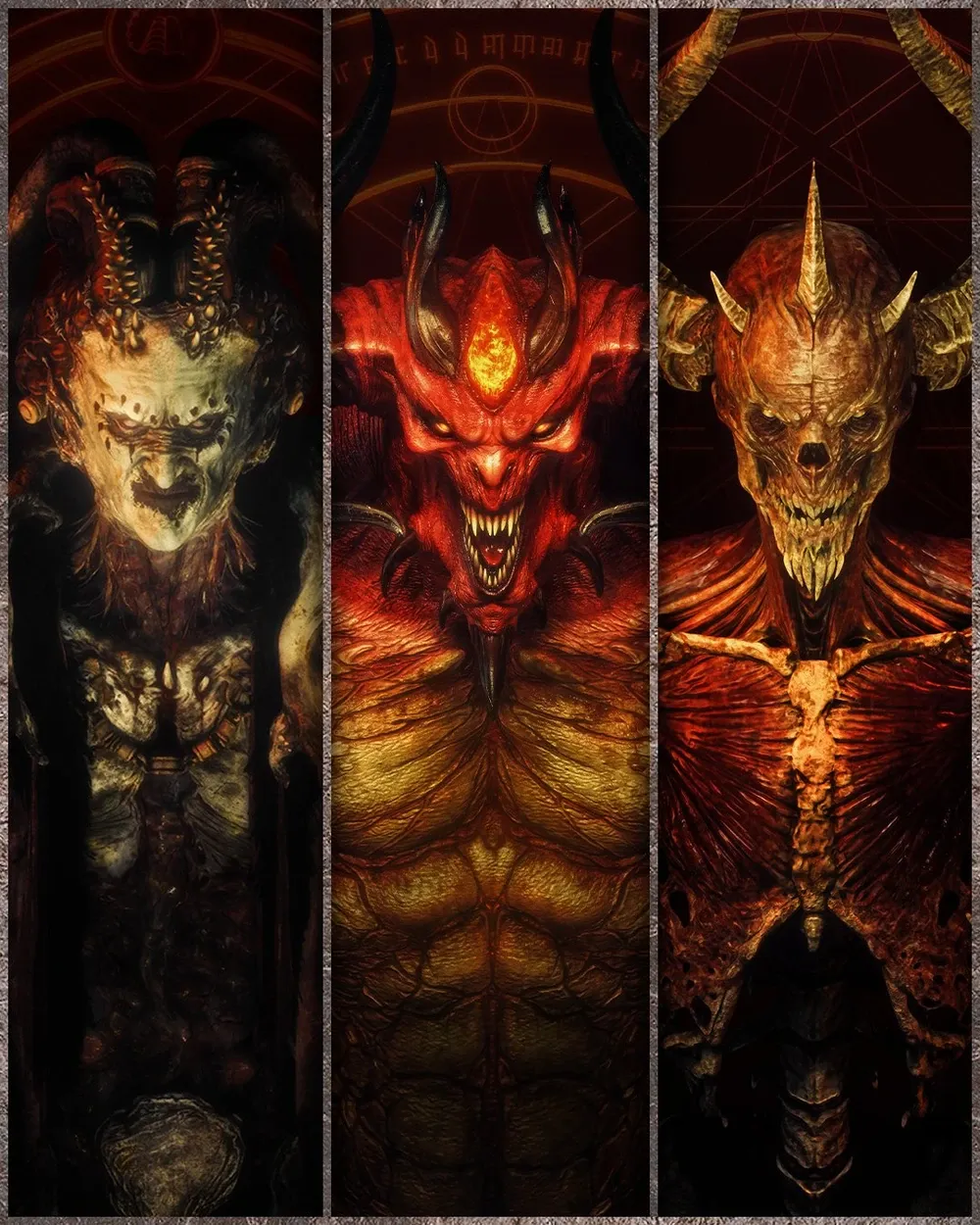
- Diablo, the Lord of Terror
- Mephisto, the Lord of Hatred
- Baal, the Lord of Destruction
Together, the three Prime Evils rule over Hell and sit at the center of almost every major conflict in the Diablo universe.
What Exactly Are The Prime Evils?
Each Prime Evil represents a different kind of corruption, and they all go about it in their own way.
- Diablo feeds on fear. He does not just destroy cities; he breaks people mentally first. Paranoia, dread, and hopelessness are his tools.
- Mephisto is all about hatred and manipulation. He plays the long game, turning allies against each other and letting conflicts grow until everything collapses from the inside.
- Baal is the most direct of the three. He brings raw destruction, war, and total ruin, with very little subtlety involved.
Together, these three have influenced humanity for centuries. They corrupted powerful mortals, manipulated entire nations, and directly caused many of the disasters seen throughout the Diablo games.
Have We Not Killed Them Already?
Yes. And also no.
Across Diablo I, II, and III, all three Prime Evils were defeated at different points in time. But in Diablo lore, demons on this level do not truly die. When a Prime Evil is destroyed, its essence returns to the Burning Hells, where it slowly reforms instead of disappearing for good.
Over time, they reform. Slowly, quietly, and often stronger or more careful than before.
That is why the same evils keep coming back, and why Sanctuary never really gets a clean break from them. Even long stretches of peace are usually just the calm before the storm.
The Endless Threat of the Three ‘Brothers’
Even when they are not physically present, the Prime Evils leave damage behind. Fear, hatred, and destruction do not just vanish once the final boss fight is over.
In Diablo 4, Mephisto once again plays a major role, but the influence of all three Prime Evils still hangs over the world. Their legacy affects events, characters, and choices, even when they are not standing front and center. Their legacy explains much of Sanctuary’s current state and why true victory in Diablo is always temporary…

We will continue this Diablo Lore Bites series regularly. With the next expansion getting closer, future entries will cover topics like Mephisto himself, the Skovos Isles, and how all of this connects to what comes next with Diablo 4: Lord of Hatred.
If you want more short lore explainers like this, keep an eye on our Diablo 4 news hub.