On February 25th, Icy Veins had the privilege to sit down with Associate Game Director Paul Kubit and Lead Encounter Designer Dylan Barker to ask a multitude of questions about the Midnight expansion. They both shared insights into the importance of class identity and complexity, the difficulties of pruning classes, the future of encounters following significant Addon changes, and even how both developers and players alike contribute to the creation of World of Warcraft. Read on for many more insights into the creation of Midnight and what to expect once Season 1 of Midnight starts on March 17th.
We’d like to thank Blizzard Entertainment for granting us this chance to pose our most burning questions!
Interview Participants
- Paul Kubit (he/him), Associate Game Director, General Midnight Direction
- Dylan Barker (he/him), Lead Encounter Designer, Raid and Dungeon Design for Midnight Season 1
- Kathryn Budwit (she/her), Guide Writer at Icy Veins, Executive Director for VISAGE
- Jörn Thieme (he/him), Icy Veins Section Manager for Retail WoW and Guide Writer
Interview Summary
Here are some of the highlights of the interview:
Class Pruning and Class Identity
- Midnight allows the team to set a new ‘baseline’ for Classes pruning certain skills and adding new ones, to make the game feel fresh and exciting. There is still lots of room to further grow class complexity in the future, whether through Tier Sets or new abilities.
- When making new changes to how classes play or are designed, the team has a wide array of knowledge and experience to draw from, including the designers, developers, and staff at Blizzard who are all avid players themselves.
- Many classes have a very broad fantasy. A Warrior can be a sword-and-board protector, a barbarian, or an armored knight. Making sure that the fantasy matches everyone’s expectations is a challenging task, especially when looking at what is and isn’t an iconic ability for each class and spec.
- Having a robust and long-lasting Beta process helps tremendously, allowing the team to collect critical feedback when making big changes to a class or spec.
- The Class Design and Encounter Design team work together very closely, to ensure that players are given the tools they need to deal with any given challenge.
Healers and Interrupts
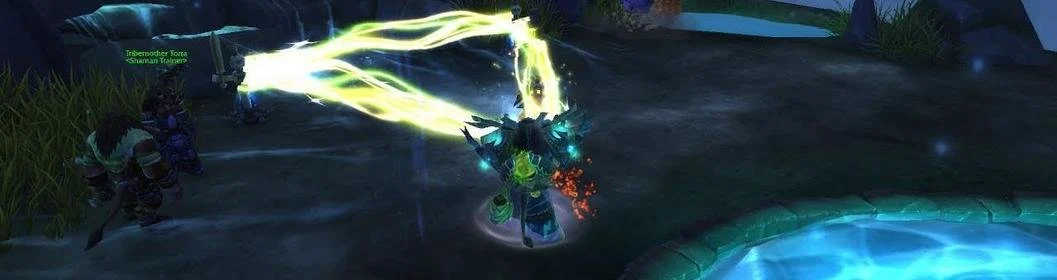
- Removing Interrupts from all Healers except Restoration Shaman aims to let Healers focus more on their actual task of keeping players alive, acting as the goalkeeper of the team, and sharing some of the loadbearing stress more evenly across a group.
- There will be fewer “Bolt-Spam” (abilities that are cast frequently and just deal damage), to ensure that players do not immediately get global’ed when no interrupts are available, or an interrupt gets missed.
- With Interrupts locking enemies out of their spells longer, the philosophy is for the group to have fewer interrupts, that will go further to keep enemies controlled, shifting more power into single-target interrupts.
- The team will keep a close eye on how things develop in Season 1, to ensure that the target of these changes isn’t missed.
Addon Disarmament and Combat Design
- Removing computational Addons — Addons that can calculate optimal positioning or movement and pre-assign players automatically — was one of the main goals of the Addon changes.
- This caused the team to think about Encounter Design a little differently, likening encounter-pacing to a piece of music. It is important to leave space for individual notes to breathe, slowing down the pace so players can coordinate and communicate, without turning encounters into a snail’s pace.
- The changes allow the team to put more spectacle and fun into the coordination aspect of the mechanics, instead of having to rapid-fire bullets and mechanics at players to keep them on their toes while Addons do the coordinating and communication automatically.
- Visual clarity is an important topic, and there may be new visual effects tech to ensure players know exactly where a swirl or circle still has its edges. Filling some of the gaps addons have left behind with certain visual techniques is critical to ensuring players can have fun with the game. The goal is to create visual effects that a player can rely on, signaling where it is and isn’t safe, even if addons might exist to help them with the process. This way the need for Addons may not be as high in the future.
Mythic+ in Season 1
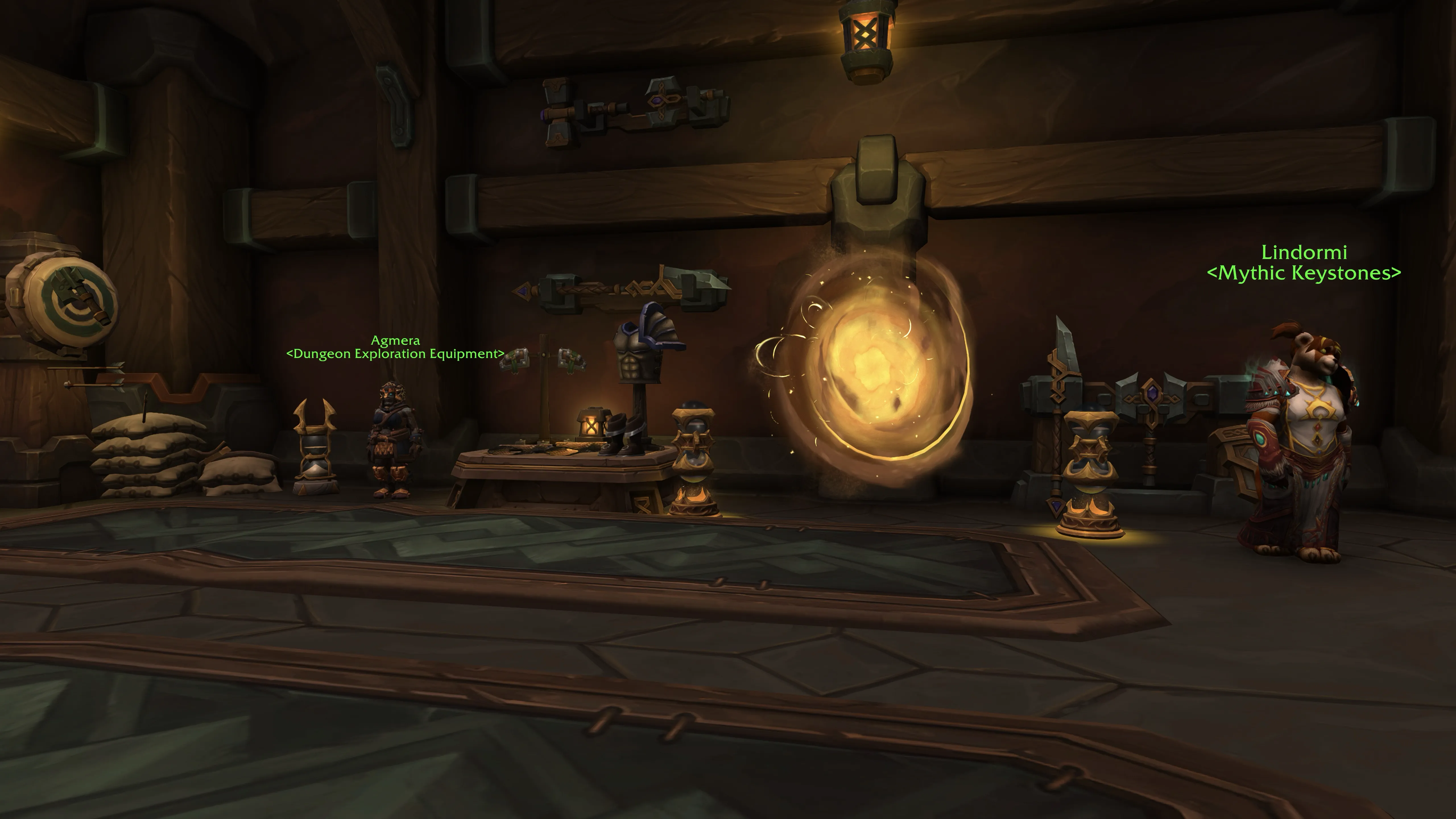
- The Lindormi’s Guidance Affix, which marks enemies in keystone levels 2 to 5 to add up to 100% mob-count, is a great way to allow newcomers to Mythic+ to have an easier time adjusting to the environment for the first time. Players who may have never tanked before can now follow a safe route, even when it is their first time tanking.
- The new Affix also aligns well with the changes made in TWW already, allowing groups to set a preferred playstyle like “Relaxed” or “Competitive”. The goal is to allow players to more easily match with other players who have the same level of experience or expectations for their dungeon runs.
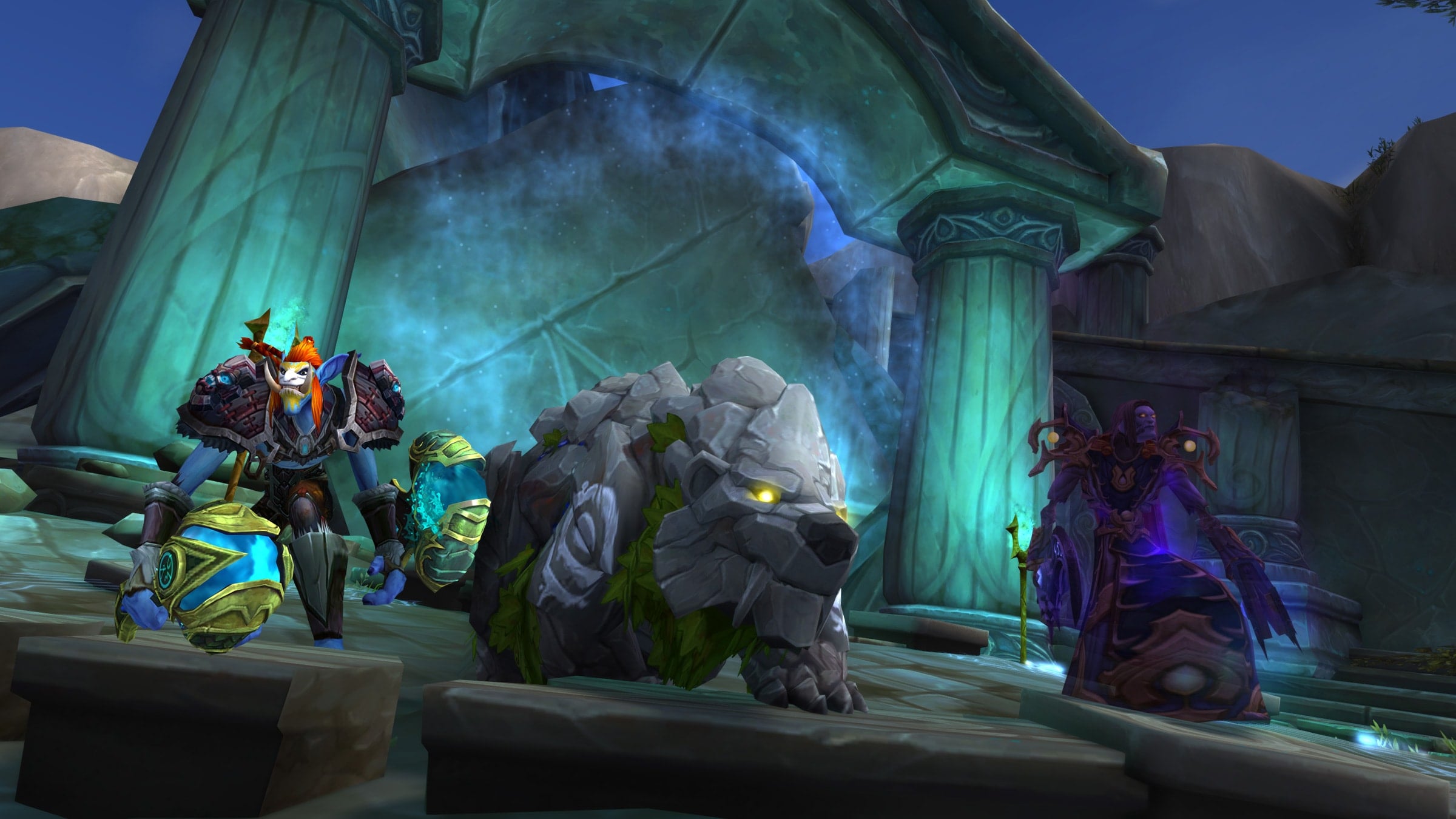
- Picking returning dungeons from previous expansions is always fun for the team, who try to ensure that the soul of the dungeon is kept intact, while changing the dungeon for modern sensibilities, with higher-fidelity art and building encounter design around what makes the dungeon or its theme unique.
- Ensuring that designers can do their work in a way that their personal style, taste, and passion can be felt, is when the team feels World of Warcraft is at its best – even if you may not know who exactly the creator of the encounter is!
Raids in Season 1
- Having a Heroic-week has a lot of value at the beginning of an expansion, due to how much content there is to explore, new class design to learn, and tasks to complete, before players feel like they are ready to challenge new raid and Mythic+ encounters. This is a unique situation at the beginning of the expansion.
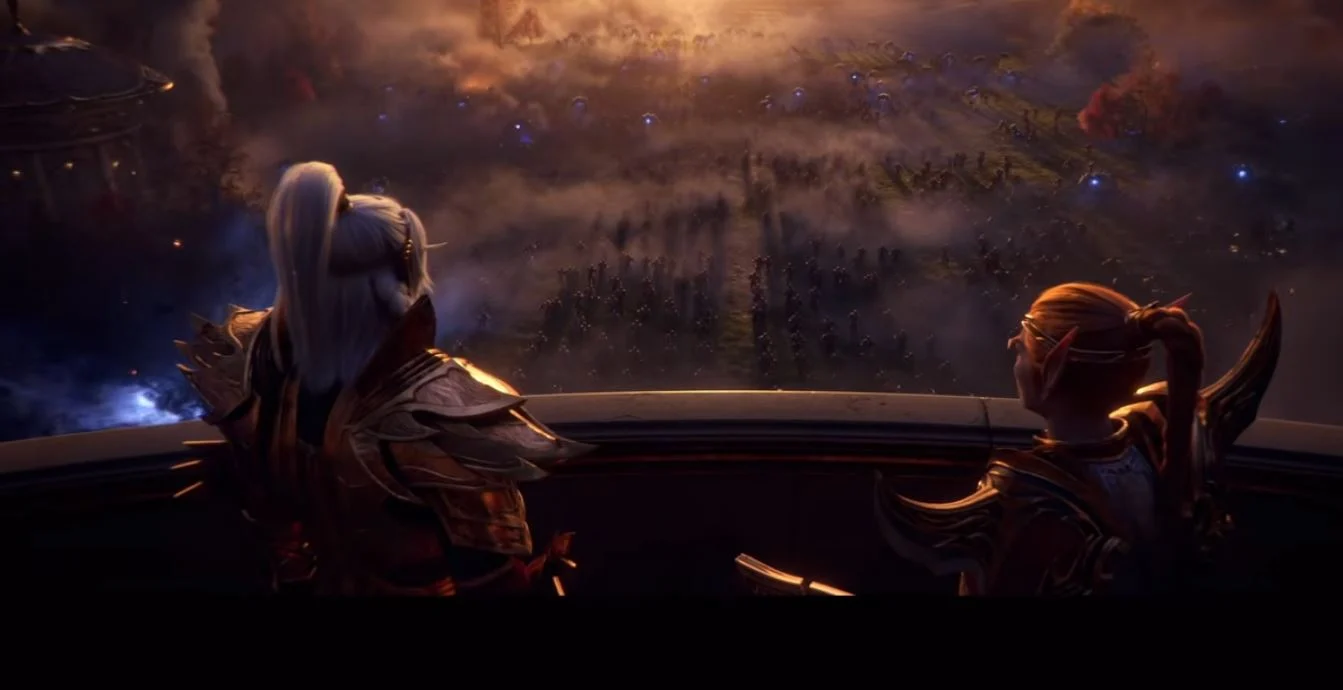
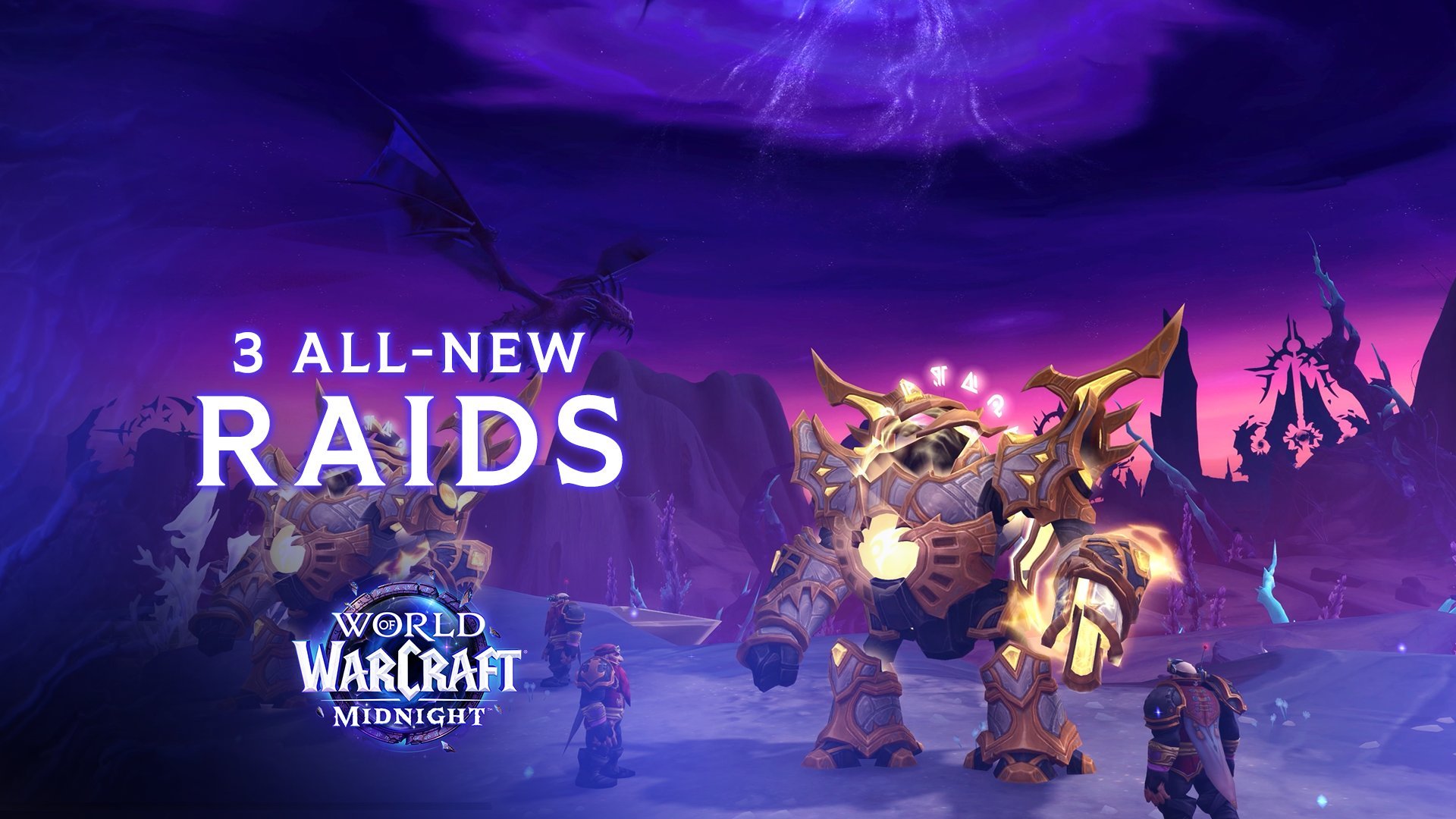
- The return of mid-season bosses in 12.0.7 and 12.1.5 will serve different purposes. While the Sporefall raid in 12.0.7 is a more relaxed opportunity for players to have more content late into a season, the yet-to-be-named 12.1.5 raid is more akin to the March on Quel’Danas, the final raid of the first 3 raids opening shortly after Midnight’s launch. Their difficulty will be different as a result, with the 12.1.5 raid likely being quite a bit more difficult than Sporefall.
- The team hasn’t yet decided on the exact difficulties for these bosses, or whether there will be a separate Hall of Fame.
Full Transcript
The below responses have been edited slightly for readability purposes.
Icy Veins: Okay then let’s just jump into it. Focusing on class pruning, this is not the first time in WoW’s history — classes typically ended up becoming more complex again as time went on, through more patches and iterations, or maybe even in future expansions.
Should we view Midnight’s class pruning under the same light as the new baseline, where new features will be added over the next couple of patches, or even in the next expansion? Is this supposed to be a little closer to the ceiling of complexity that you expect for future already, or for the classes in general?
Paul Kubit: I think it’s a great question. One of the benefits of taking an inventory of possibilities is to make sure we have room to grow. And so, ‘Baseline’ is probably closer characterization than this being the absolute ceiling of complexity.
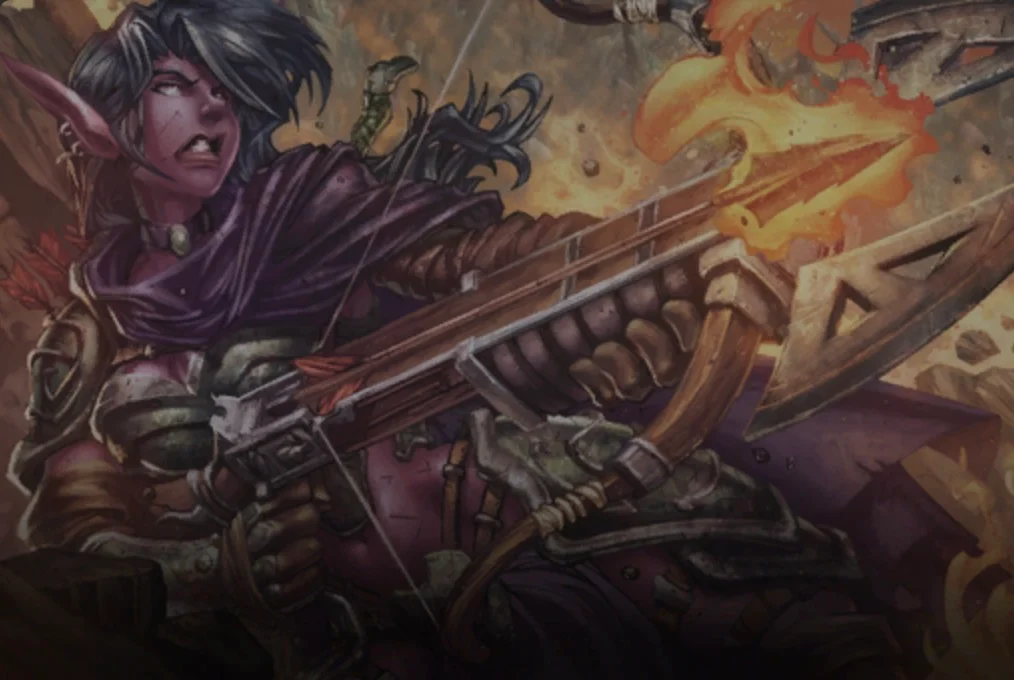
You can already see this with a lot of the class design changes that are already going into Midnight, as this is not pruning only, but almost as many additions as there were prunings. With additions to Survival Hunter — in the form of Boomstick — and the name of the ability escapes me, but the one where you jump on your target, which is a lot of fun to play as well. Shadow Priest is another one I’ve been enjoying a lot, with the void tentacles to spread my DoTs as well.
This gives us the room, in the class design team, to grow complexity in class design and in talents. As we get further into the expansion, there are opportunities for gear to add complexities to rotations: in the form of things like set bonuses and etc.
Stepping back, part of the goal of the class design changes you might see — from expansion to expansion, or patch to patch — are to make sure the game feels fresh and that we’re addressing any ergonomic issues that come up; but also that it feels fresh; it feels novel; you have things to look forward to; cool new ways to interact with the world that you might not have had in the past.
Icy Veins: One of the most popular discussion threads on the official forums saw players express their feelings that they’ve lost too many of their iconic abilities, such as: Blessing of Summer, Divine Star, or Storm, Earth, and Fire.
Do you have an internal framework for which spells and abilities are considered “identity-defining” that you know you’re never going to be touching? And could you maybe shed some light on the process within the team when you know you have to prune? Like, exactly how does that discussion happen?
Paul Kubit: I wish there was a mathematical rubric that we could follow to do this, but it varies from class to class, from spec to spec, for sure. A lot of this is just based on class designers, the team, and folks who are just fans of the classes.
I’m not a class designer myself, but when we’re talking about changes to class design play, I’ll often hop in and give some feedback on my own, because I have my own 20 years of experience playing with these classes as do hundreds of people within the company. We’re reaching out to devs on the team, reaching out to partners in QA, reaching out to all sorts of folks to be able to understand like, “Hey when we’re looking at making these changes to an Evoker, Monk, Warrior, or what have you: how do these changes land on you?” And we get a lot of really good critical feedback there.
And then, the second part of this is, being open with designs and making sure we have a pretty robust beta process. WoW has a fairly extended beta and PTR when it comes to class changes in an expansion or a patch respectively. So, this gives a lot of opportunity for us to say, “Hey, here’s like, based on our understanding of a case like this; defining a line of what feels iconic and what doesn’t, and where our line lands; How does this land with you players?” and we do a lot of gathering feedback from folks to say like, “Hey, this doesn’t feel quite like my Warrior anymore, it doesn’t quite feel like my Mage anymore,” or like, “Nope, this is great; I’m enjoying the changes you’ve made, as well.” So that feedback is really critical.
Something to keep in mind: I think one of the things about WoW classes is that a lot of them are like really broad and general in their fantasy. A Warrior can meet a whole bunch of different fantasies: am I a sword and board gladiator who goes into fights? Am I an armored knight who goes and protects people? Am I Conan the Barbarian with two swords swinging around? Or am I someone with a single giant weapon?
So it is often a challenge to make sure that fantasy matches to everyone’s expectations. We’ll do our best to make sure that it hits everyone’s line of iconic, or as the maximum amount as possible. But oftentimes, it’s so many people enjoying the game, that it ends up being an extended discussion that extends expansion to expansion and patch to patch.
Icy Veins: Speaking of Mythic+ — because we think this is also a very Mythic+ centric topic — a lot of healers were lamenting about losing access to their interrupt abilities. And so, there’s a big fear there that what will happen inside the dungeon is: all the enemies that are now casting more freely, you don’t have all the interrupts for — to make sure that all of them are being stopped at once; that they don’t all gang up on the same player; that player getting global’ed.
Is there any kind of tech in the backend that exists, or that you’ve developed to ensure that healers still feel stressed on these trash packs? Even though they no longer can ensure that every spell gets interrupted.
Paul Kubit: Yeah a little bit, so like, tech might be a stretch of the term, maybe a little bit of tech.
So like, part of the goal here is to make sure that… Healers already have a lot of jobs: they’re playing goalie for the entire team. When we look at interrupts, we’re able to take that job off of most healers’ responsibility list. That then allows them to focus more of their energy on playing goalie — keeping folks alive — and that helps manage the loadbearing of the stress across the entire group. So that’s sort of the theory.
I think we’re very excited to see how this plays out in Season 1 of Midnight, because I think you’re right: this is a change that could go either way and we want to make sure we’re hitting the right target here. So we’re gonna keep really close eyes on this.
This was made sort of in pair with changes to how these encounters work. So you should see less Bolt-spam; you should see fewer Bolts; fewer cases where multiple Bolts are focused on a particular target. And therefore, they get global’ed because interrupts were missed; or maybe in this case, unavailable. But yeah, this is something we’re gonna be keeping a close eye on in Season 1 and hopefully folks enjoy.
Dylan Barker: I also should call out that single-target interrupt durations for legitimate interrupts, not just stuns or other forms of CC, have had their effect duration increased. So, fewer interrupts will go further — especially single-target interrupts: we wanted to shift a bit of the power towards that.
Icy Veins: There’s obviously a lot of people on the encounter design team, and there’s always a bit of an old debate about how class design and encounter design have to work together. How much does the encounter design inform decisions for the class designers? And vice versa.
Say for example, the change with the healer interrupts mentioned earlier. So are there specific challenges when designing content? Especially since players no longer have the tools they’ve had in the past.
Dylan Barker: Yeah, so we’re cooking in the same kitchen with our friends in class design. We’ve had moments for sure where directionally, we both have to adjust. And it’s uncomfortable, because we have to get rid of some of our favorite toys, and so do they at the same time. But we’re a team, and that kind of communication is just part of professional game dev.
So, we understand that — without us setting the table for them, and vice versa — the game just doesn’t feel great, right? If the encounters come in and grow in complexity, as the class team has gone through to make sure that their classes play at the right level of complexity, we’re actually the bad actors in this case. So a lot of it is just about understanding directionally where the entire game wants to go, and then the two of us learning to cook nicely together in the same kitchen.
Icy Veins: In a post about Combat Philosophy and Addon Disarmament, Ion called the Addon changes “potentially the single largest change an expansion has ever made to WoW.”
To match this new environment, were there any lessons that the team — either encounter design or even class design — had to unlearn something like status quo beforehand? Did you not have to adjust? Because players definitely have fewer options when it comes to some of the tracking abilities of Addons.
Dylan Barker: I think some of it is just on us having to do extra work in order to send the right data to players for our own custom UI, or for our own in-house UI. That has caused us to think about encounters a little differently. It’s also been a lot of extra work on the team: not necessarily in a bad way, but it’s just one extra thing to make sure that we nail. They’ve done that really well, so that part’s exciting.
I think in terms of the encounter design itself, sometimes we’ll liken building an encounter-pacing to music. It’s about leaving space for individual notes to have time to build up and time to fade. So learning the lesson of ‘the pacing needs to slow down’ is pretty important. It’s not going to feel snail’s pace by any stretch, especially in higher difficulties, it’s still going to feel pretty stressful. But just understanding that we actually can afford that time to breathe now, because the computational addons in specific are what we’ve taken action the most against. We should be able to have some fun there with things that take a little bit more time and thought with communication.
Icy Veins: Computational Addons generally handle a lot of the thinking and assignments for player movement and positions; they’re kind of a thing of the past now, right? So, how much has that impacted or freed up your ability to design raid encounters and dungeons going forward?
Dylan Barker: The “Computational” part there is most important because, as I’m sure Paul would stress, we didn’t want to get rid of every Addon. We still want people to have the ability to customize the way they receive some information and the way that it presents.
Specifically the computational side though is cool to have taken out, because there are mechanics that rely on raid coordination, on team communication; be it through voice or ping or what have you. That kind of effort is a skill access that we found it hard to push on, in a world where an Addon could say, “I know when this is going to happen, I know a bunch of pre-placed markers and I can just fill those in. I can automatically say that when people get a debuff, they are just told to go to these pre-supposed places at this pre-supposed time.”
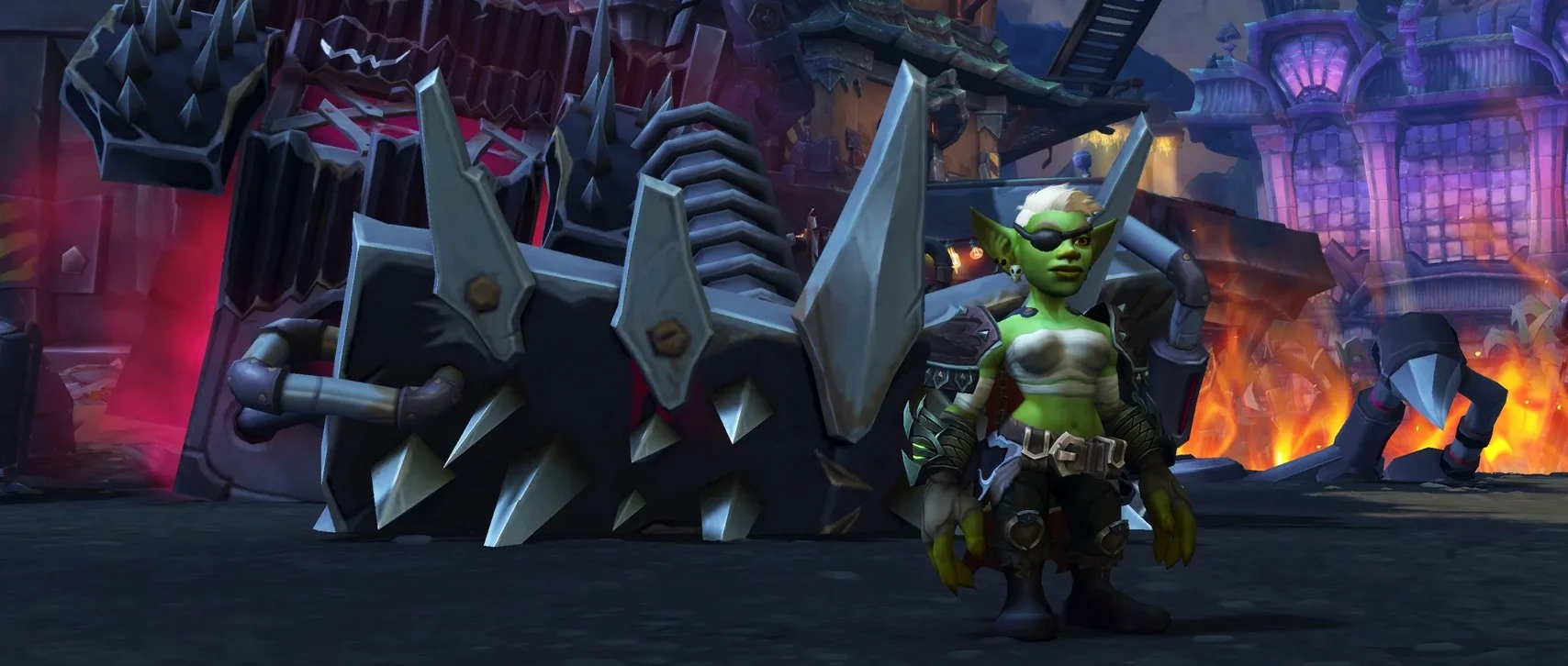
I think most players kind of realize in a raid, that if they had to do that, they wouldn’t have as much space to deal with having bullets shot at them, or whatever, at the same time. So we’ve been able to step back on some of that, and put a lot of the spectacle and the fun and the teamplay into the coordination mechanic itself.
It doesn’t mean we won’t have instances where we want you to be moving quickly and to have some of that dexterity dance-based mechanic. It’s just not something we have to do exclusively to make things easier or harder.
Icy Veins: When we’re looking at Mythic+, the new Lindormi’s Guidance Affix marks enemies with Temporal Sands, and following this Guidance allows players to end up with 100% enemy forces by the time the run finishes. Can we hope to have this Affix become a permanent addition to WoW in future seasons as well, or will this Affix be lost to the shifting sands in Season 2?
Dylan Barker: I am not the person to commit to that being long-term (laughs). However, it has the feeling of something that… It’s not only going to help people get into Mythic+, especially as a tank, it’s also going to help inform us how players want that kind of information too.
It’s going to be a really fun thing; I personally haven’t tanked M+ before — I’m almost always a healer — so I’m going to give Mythic+ a try tanking this go around. Basically just to see how this feels. It’s a useful racing line, and I know that expert players are going to immediately know, “I should’ve gone this other way.” But just for me, coming in there, there’s something at least that I can say to pugs, “Hey I’m going to do this. Please understand, this is just what I’m comfortable with.” So I think that’s going to be really cool.
Icy Veins: Right, we agree. We think it’s going to be really great for new players starting in Keys.
Paul Kubit: I’d like to hop in on that one too, and highlight the Lindormi’s Guidance is a fantastic new Affix that we see a lot of people excited for; we’re really excited to see how it plays out. Hopefully this is something we can continue with and continue to build on over time.
This is partnered with some other changes which are already in the queuing system you can see right now in the 12.0 Pre-Patch, and this is the ability to tag your group with your defined playstyle. And these come together as a package for groups to do a better job, especially if you were on the newer-end of entering into group content, entering into Mythic+, or what have you.
To be able to more clearly message to folks, “Hey, I’m learning this dungeon, and therefore, this group that I’ve posted or the groups I’m looking to join, are groups that are tagged as learning; or maybe groups that are tagged as relaxed.” And then folks who are not looking for that type of experience, or not looking for people who are learning — because they want to play in a more competitive way — or have higher expectations that folks who are joining that group know the dungeon, have done it several times, and you could tag your group as competitive and you’d be able to do that.
So I think these changes going into Midnight should help provide an ecosystem for all sorts of players to be able to find the right group that they are looking for, and avoid any of the drama that could come from mismatched expectations when one person is entering a group expecting one experience, and another person is entering expecting a different one.
Icy Veins: Sticking with the Mythic+ theme, I was curious about Pit of Saron as the first Wrath Dungeon ever to come into the Mythic+ rotation. How much did you have to rebuild Pit of Saron to make it viable in Mythic+, and what made it the right “pick” to modernize in Season 1 of Midnight?
Dylan Barker: The process of picking seasonal dungeons is pretty fun because we’ll sometimes go back and we’re looking for like a theme, and the theme is maybe a little bit hard to see at first, or we’re thinking about something we haven’t seen in a long time.
We obviously don’t want to recycle something that’s just recently been in a season. Going back to Pit, we didn’t have to rebuild as much as you might think, but there is still some rebuild, and that philosophy… We have some folks on the encounter team who are very Mythic+ specialist, and we’ll go through the dungeon and basically pick out what elements do need significant rework for the modern context, and which don’t. There’s special attention paid to what made that dungeon feel special. So sometimes when we do a rework, it’s less about destroying the “soul” of that particular encounter — or starting from zero — so much as it is rebuilding around it to make it sort of with modern sensibilities, if that makes sense.
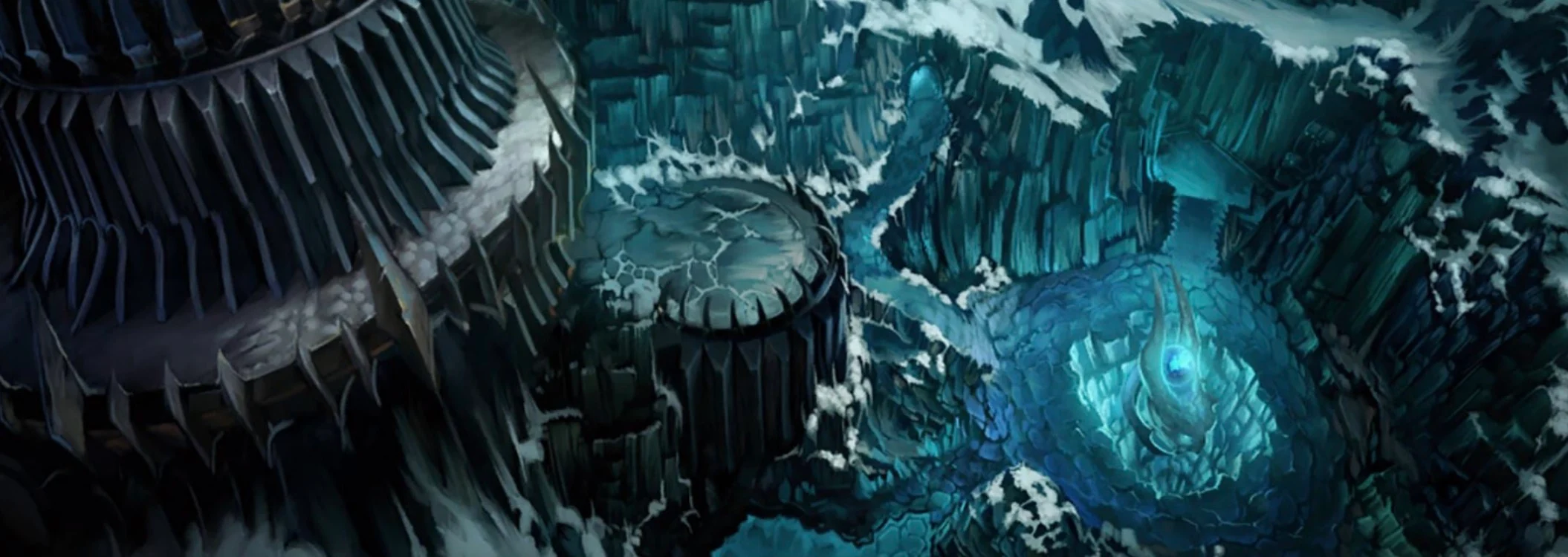
And then, obviously, the art fidelity has gone up over the years. So there are some times where we get in front of a group of artists, and they say, “We’d really like to update these bits for you as well.” 🙂
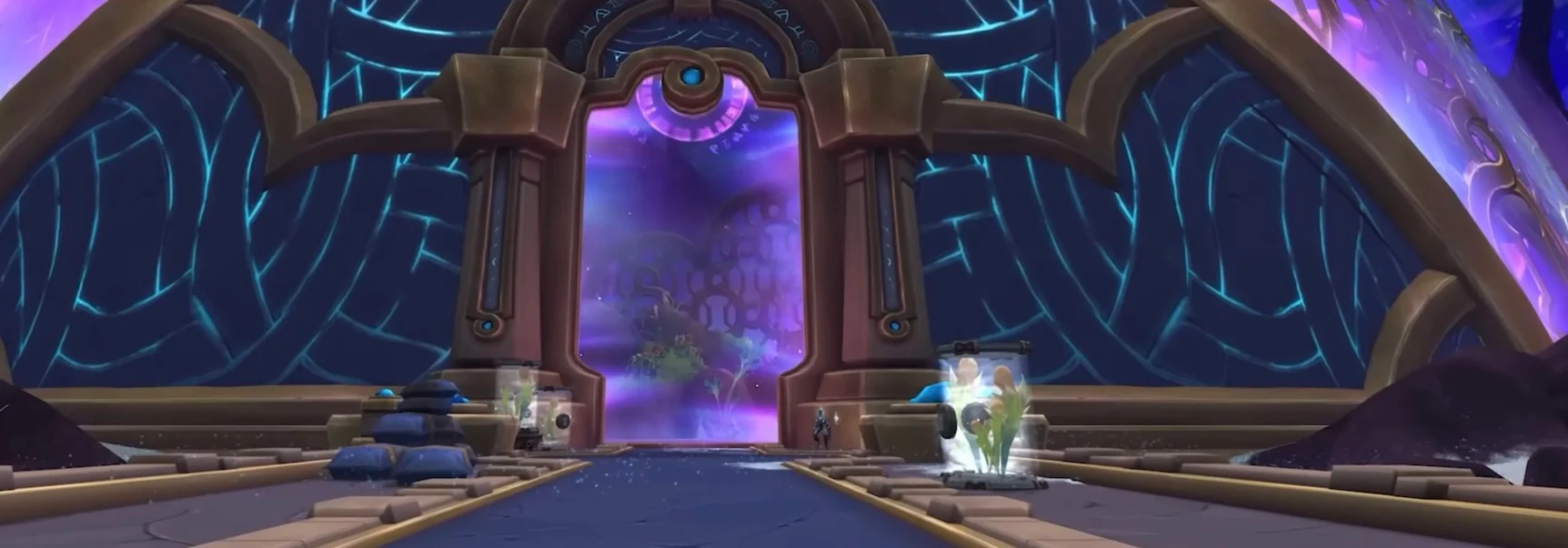
Icy Veins: Many players noticed the difference in design between Eco-Dome Aldani and previous dungeons in The War Within, such as with fewer interrupts and stops required on trash — while also having lots of trash packs — so players had more choices in their dungeon-routing.
Did this serve as a proof of concept for you, and were you happy with the reception people had for this dungeon (which really felt like a blueprint Midnight dungeon already)?
Dylan Barker: Yeah, I would say that there’s some of that there for sure. One of the most fun parts about being a designer on WoW is that we really do have a lot of license to pursue new thoughts. So when we have a directional shift, where we want to kind of create a certain flavor for trash or for a boss or something in a dungeon, that we want to stand out as a mile marker for something in the future.
We’re always also cautious to say, like… Someone on the team will be having the opposite extreme thought at the same time, and it’s really just about making sure that the center of gravity is appropriate. Because the best WoW feels ever is when you can feel the personal style and personal taste of the designer coming through in their work, without knowing who they are. You definitely will get that on the encounter team: we have a wide swath of technique. But ultimately, it’s about keeping that center of gravity in the right direction.
Icy Veins: Visual clarity has always played a very important role in raid encounters, especially for melee players who have to (somehow) be aware of mechanics amidst hunter pets, frozen orbs, rains of fire, and other visual clutter.
Is there any new tech or animations in Midnight, that you created, to help visualize important boss mechanics? And are there plans to let players more dynamically hide unwanted spell effects further?
Dylan Barker: Yeah, we do have some new visual effects tech… This is really ‘inside-baseball,’ but it’s worth calling out because it was cool work: to make sure that the fidelity between a swirl on the ground and the actual effect that’s happening are much much more accurate and much more consistent and easy to do.
So we’ll jokingly send our coworkers to video game court when that is off; to tell them they messed up, that something is slightly bigger than it looks. Those sorts of things, I think, are like very big, because when players have that happen to them, it’s very frustrating. So getting that stuff right and clear is very important. Especially for melee when you’re moving in tight spaces.
We’re also working a lot just on visual technique, trying to fill some of the gaps that Addons have always filled. And that’s not to say even that there won’t be addons that will help you with those same gaps, even post-Addon disarmament, but there is a fun approach for us here too. If we can explain what we mean mechanically — using visual effects in the world, on your character, on your allies — maybe it just lessens the need for the Addon, even if you still want it? Even if people are still saying, “You should try it,” or whatever? If it is ultimately something you can recognize in the world, that might just make the Addon less required — even though it is still available.
Paul Kubit: From the other side — you mentioned class design — yes, sometimes it can get a little cluttery in like when you are in a raid fight in particular, and you have a good number of players, there are a lot of spell visuals that can take up the visual space in the fight arena and detract from the encounter itself.
There are some changes made, in one of the later patches in The War Within, to give players a little bit more fine-control over what they see from their party members: in terms of how their other abilities are shown in game, you can define what they want to show — everything or filter it. As far as I’m concerned, that was a good start.
We’re not quite there yet in terms of giving you full control over how much stuff you see. Increasingly in expansion over expansion, there’s a lot of cool stuff that can happen as a result of your character playing: could be your abilities, but also abilities which are triggered off of a talent; triggered off of a trinket; a weapon; another piece of gear with a cantrip on it that has some special effects. Weapon enchantments — all sorts of things that can make things happen in the world — that, as they add up (particularly in large groups) may need to be filtered down to allow you to focus on that.
Nothing specific to announce in Midnight, but I think it’s something we still want to continue to keep an eye on down the line.
Icy Veins: Midnight also sees the return of smaller-scale raids in the middle of a season. Especially also with the single boss fights that happen later in any given season. On a scale from Halion to Helya, where would you want mid-season raids like Sporefall to land in terms of difficulty and average pull-count for say a CE guild?
Paul Kubit: I can start with this. I think when we looked at the roadmap, we saw a couple of mid-season raids popping up — one in 12.0.7 and one in 12.1.5 — those are doing different things. So I think, probably, what ends up happening is the tuning on those ends up feeling different from one another.
The one in 12.0.7 is going to be pretty late in the season, and so it’s more of its own one-off opportunity to come later in the season. I think what we’re looking for there is, to make sure it entertains as many player types as possible. If you are someone who has been pushing hard to gear yourself, then this should be something that will provide an interesting challenge for you. At least another boss name to notch onto your list of bosses that you’ve taken out this season. 📝 But even if you’re someone who’s just hopping into this, we want to have a difficulty approachable for you as well.
The second one — the one that’s coming in 12.1.5 — this is a story raid. It’s maybe closer to the concept of the March on Quel’Danas raid that we have now; that’s a continuation of the story (that’s happening in 12.1) is where that one ends up landing. So tuning ends up feeling maybe closer to March on Quel’Danas so it’s a little bit more of a continuation of the season we’re playing through here.
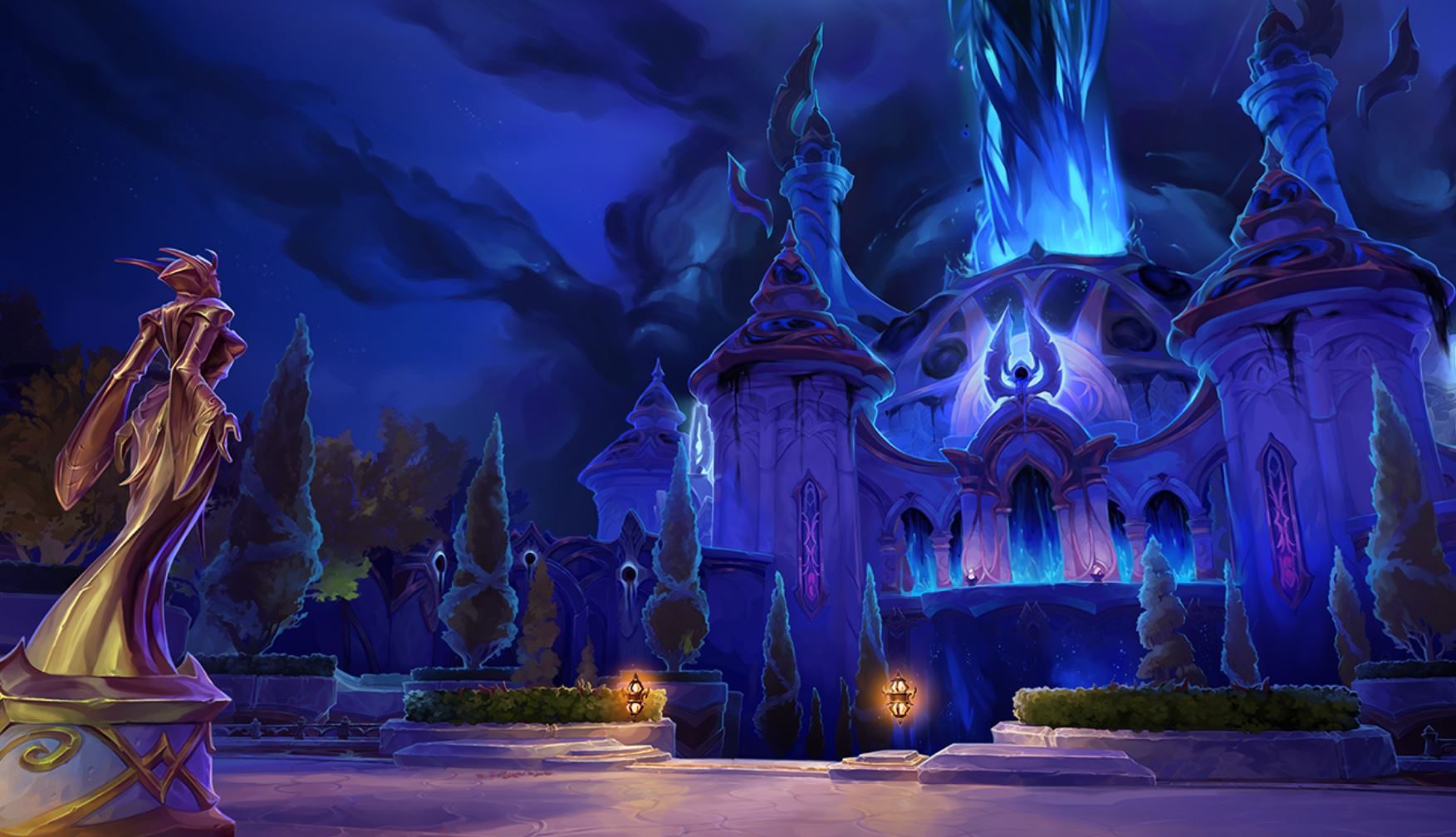
Of course, more details to come as we get closer to those patches. I don’t think either one of them is going to be easiest raid boss we ever saw? I don’t think either one is going to be the most difficult raid boss either. But also, permission to change our minds later. 🙂
Icy Veins: With more content than ever in the weeks prior to a new Raid opening, have there been discussions on having a Heroic-week for each season going forward? Or are we just sticking to Heroic just for the beginning of the expansion?
Paul Kubit: I would never rule anything out, but there’s not a whole lot of discussion about that.
Heroic-week has a special role in the beginning of an expansion, just because there’s SO MUCH more content that comes with a new expansion. Lots of different players play at different paces, and so it gives more of an opportunity to have a little bit of time:
To settle into the new dungeons; your new class; class changes that have happened within your class; MAYBE a new character if you chose to reroll (which is also a very common thing you see people doing at the beginning of a new expansion). And those need for a little bit more time to explore, complete achievements, get all of the content, the outdoor zones, and what-not out of the way, before settling into the season.
It’s something which is a lot more uniquely per expansion than it is per patch. Once again, wouldn’t rule anything out in the future. But for now, I don’t know if it’s something worth thinking a whole lot about.
Icy Veins: Is there going to be a Hall of Fame for the mid-season raids?
Paul Kubit: That’s a great question. We’ll have more details on that as we get closer. I think the team is still talking about specifically how those things will land, and it may be different for each one.
Thank you very much, Paul and Dylan, for the interview. It was a pleasure talking to you both, and we hope the entire team at Blizzard Entertainment will have a successful and enjoyable Midnight launch!