Introduction
James Yen, Lead Game Producer, opened up at BlizzCon 2026 about the philosophy shaping the future of the game and why it is far from dead.
The Six Pillars
For years, Heroes of the Storm fans have wondered what the future holds for Blizzard’s beloved crossover MOBA. The game may have entered a quieter period, but behind the scenes, a small group of passionate developers has been steadily working to keep the game alive, healthy, and moving forward. Before the team could decide what to build, they needed to decide what Heroes of the Storm should be.
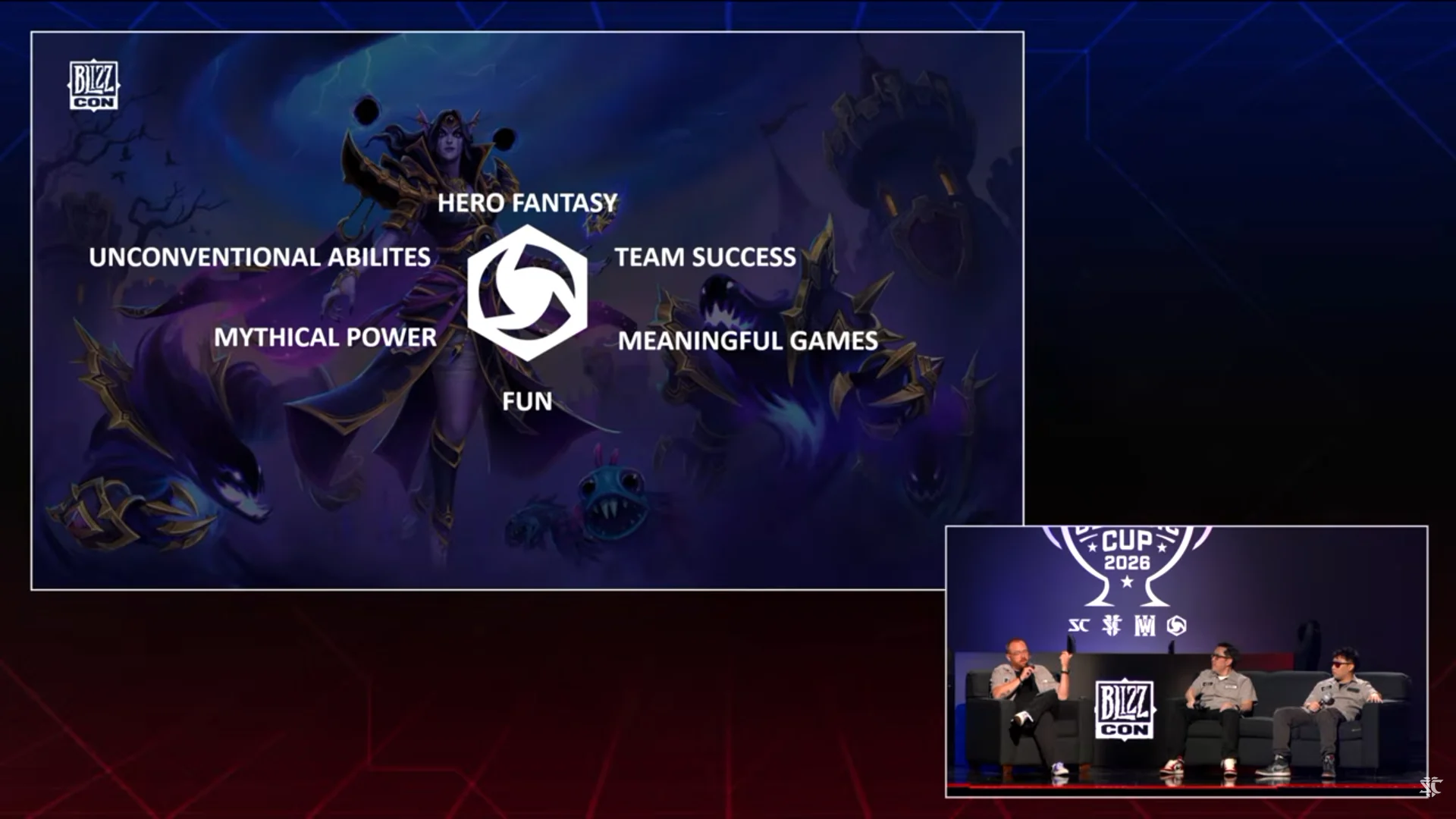
James Yen, the proverbial janitor behind the latest updates and bug fixes, offered a glimpse into the philosophy that is guiding the team’s recent work. Their strategy can be summed up in six pillars: Hero Fantasy, Unconventional Abilities, Team Success, Mythical Power, Meaningful Games, and Fun. Together, they form the foundation for the development team’s approach to Heroes of the Storm.
1. Hero Fantasy
The first pillar is perhaps the most fundamental: Heroes need to feel like the characters they’re representing. They have to capture their essence, so that the players can feel like they are that character while playing.
Heroes of the Storm has always had a unique advantage. It brings characters from across Blizzard’s universes together in one game. Players aren’t simply selecting a collection of Abilities. They’re stepping into the shoes of characters they may have loved for decades.
Whether the developers are creating a new Hero or reworking an existing one, Hero Fantasy is a central consideration. The question isn’t simply “Is this ability balanced?” It’s also “Does this feel like the character?”
A mechanically balanced Hero that doesn’t capture the essence of its character misses one of the things that makes Heroes of the Storm special. This is also why the community is always so excited about new Hero releases.
2. Unconventional Abilities
Heroes of the Storm isn’t afraid to let its characters do ridiculous things. Balance is important, but it isn’t the only consideration. The team also wants players to experience moments where they think “I can’t believe I just did that.”
The goal isn’t to eliminate unusual mechanics because they might be difficult to balance. Instead, the team wants to preserve those mechanics while ensuring they don’t completely break the game.
That distinction is important. The question becomes not “Can we balance this?” but “How do we balance this without taking away what makes it awesome?” For the Heroes of the Storm team, unusual abilities are part of the game’s identity.
3. Team Success
There are countless ways for a player to contribute during a match. You can soak experience, push lanes, capture Objectives, clear Mercenary Camps, or engage in a team fight. But, whatever you’re doing, it should ultimately help your team.
The developers want to ensure that individual activities contribute toward collective success. They don’t want players to spend an entire match pursuing their own goals while ignoring what’s happening around them.
That doesn’t mean every player needs to be permanently grouped together. Heroes can still support different playstyles. Rather, the philosophy is that individual decisions should have meaning within the context of the team.
4. Mythical Power
You’ve made the right decisions. You’ve landed your Abilities. You’ve found the perfect opportunity and executed a sequence that turns a fight around. Suddenly, you feel powerful. This is also what the new Mythic Reward system is for.
Heroes of the Storm has always had room for high-level skill expression but the development team wants to lean into that feeling even further. A great player shouldn’t merely be technically effective. They should occasionally have moments where they feel extraordinary.
The new Mythic Reward system is part of this philosophy but the broader concept is about creating opportunities for players to express skill and experience those spectacular moments rather than just relying on team play and mechanics.
5. Meaningful Games
The development team wants every match to feel active. Players shouldn’t spend long stretches wondering what they’re supposed to be doing or feeling as though their actions don’t matter.
This philosophy can be seen in the team’s changes to the game’s overall pacing. Mercenary Camps now spawn earlier and some Maps are being adjusted. The objective is to keep the battlefield active and encourage players to make meaningful decisions.
There’s also a target for game length: roughly 20 minutes. That doesn’t mean every game will last exactly 20 minutes. Some will end earlier, while others may run longer. The important thing is that games should reach a meaningful resolution rather than dragging on.
There should always be a point where the players are moving toward victory or defeat. Once the outcome is clear, the match should resolve sooner than later. The goal is to maximize the amount of time players spend in the kind of Heroes of the Storm games they actually enjoy.
6. Fun
This is the destination toward which all the other pillars lead. And all of them ultimately serve one purpose: making Heroes of the Storm fun to play. When the development team creates something, they want it to be fun for themselves and hope players will feel the same way.