


After several days of speculation, Blizzard has finally unveiled the full patch notes for the upcoming Patch 3.1.1 of Diablo 4, scheduled for Tuesday, July 14th.
While Season 13 was a massive success for Blizzard, the current Season 14 is experiencing a lot of backlash from the community and is generally viewed as a major downgrade. The game’s pacing, itemization, and overall playability have all been negatively affected by this season’s sweeping changes to Diablo 4’s most elite tier of items – Mythic Uniques.
In Season 14, Mythic Uniques are harder to find and craft, while the new Mythic 3.0 overhaul completely dilutes the available pool of Mythic items for every class.
As a result, players have been eagerly waiting for any news and updates about the game in hopes of getting some much-needed improvements to the user experience.
Unfortunately, the upcoming patch is not the answer that we’ve been hoping for.
And while the patch does address some of the key issues of Season 14, it is merely scratching the surface, leaving Diablo 4’s community frustrated and wondering whether or not Blizzard even understands what players actually want. If anything, these patch notes only further the disconnect between hardcore fans and the development team.
One Bright Spot: More Pandemonium Fragments
One of the issues that the patch does address is Pandemonium Fragments. Fragments are a rare material introduced in Season 14 that allows players to craft their own Mythic Unique items. This is achieved with the new recipe in the Horadric Cube that turns a random Unique item into a Mythic Unique of the same item type.
In the live season, it takes five Pandemonium Fragments to craft a Mythic. However, Diablo 4 has been very cheap with this resource, so there are several quality-of-life changes coming to make Mythic crafting more accessible.
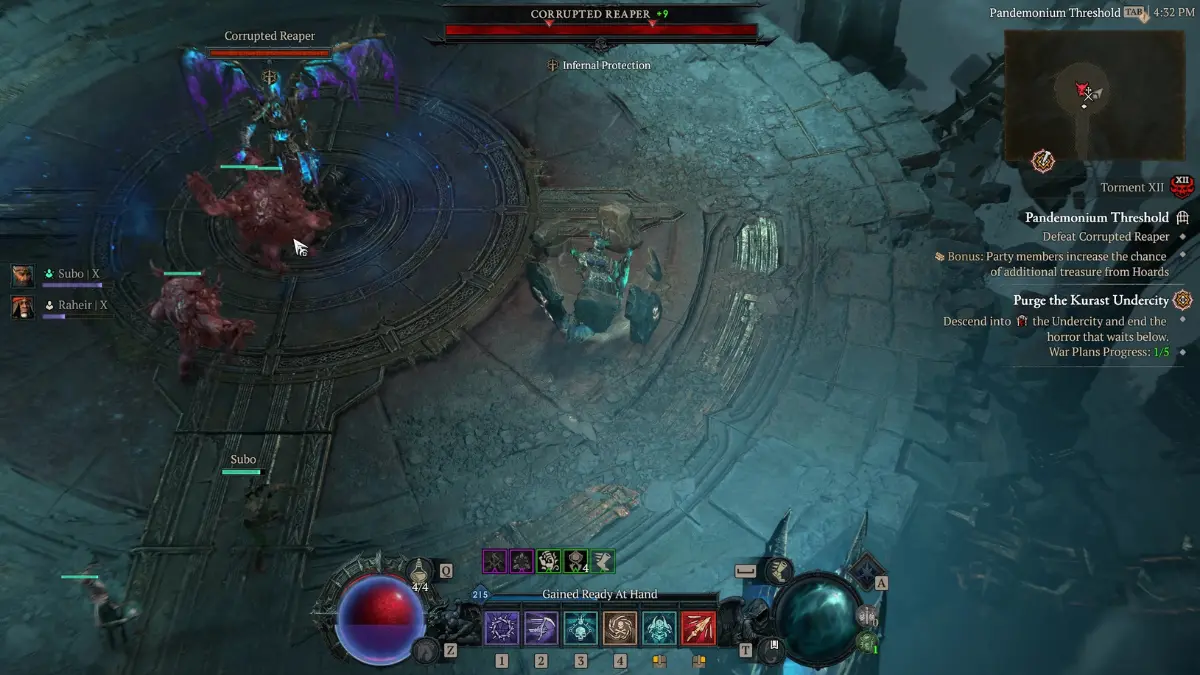
First, the recipe itself is getting rebalanced. Once the patch hits, we will need one fewer Fragment. We are also getting more reliable ways of farming them. Corrupted Reaper, the new Lair Boss, currently only drops a single Pandemonium Fragment in Torment 12. This will be increased to two Fragments per Hoard Chest. If you are using the Lair of Plenty War Plan upgrade, you will get four Fragments instead.
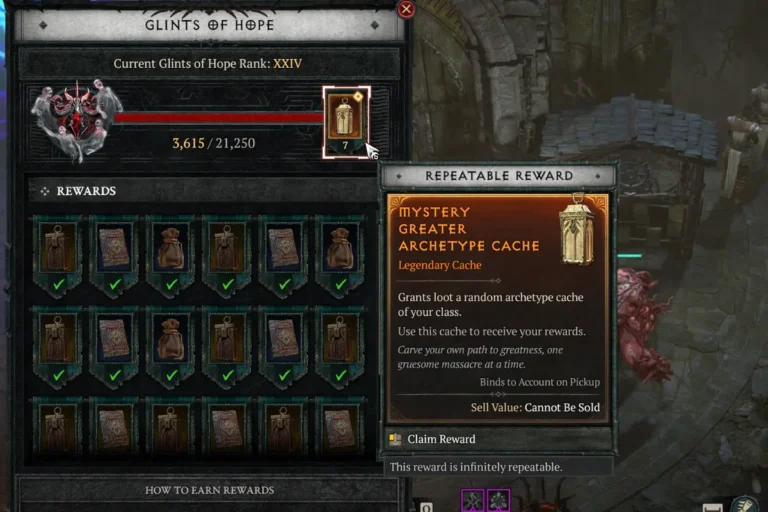
Glints of Hope, the infinitely repeatable season reputation board, are also getting a strong buff. Players have a chance of receiving a Fragment upon opening these caches, but this chance is quite low right now. The new patch will guarantee one Fragment per cache on higher difficulties, making the reputation board another reliable source for farming this rare material.
Other than the Fragment buff, the patch notes also promise a higher chance of Iconic Mythic Uniques dropping across the board, which is yet another issue that we covered before.
Finally, according to the patch notes: “Fixed an issue that was preventing certain sources of Uniques from dropping as Mythic, including Lair Bosses.”
It is not clear what this awkwardly worded phrase means in practice, but we assume that some Lair Bosses in the game are not able to drop certain Mythics at the moment.
The Crafted Tag Is Still a Problem
While these improvements should help more players craft their desired Mythic Unique, they can still only use one. The crafted item tag is another controversial change introduced in Season 14. Every item obtained through crafting is now tagged as a crafted item. This distinction is not important for the majority of items in the game, but for Mythic Uniques, it is essentially a restriction, as players can now only wear a single crafted Mythic Unique item.
The intention behind this is quite clear – the devs don’t want players to craft most of their endgame items, so this is meant to encourage playing the game instead. But there are several major problems with this philosophy.
First, the implementation of this system is much different from what was originally presented on the Season 14 PTR. During the PTR, all Mythics created with the new Cube recipe were indeed marked as crafted. But once the season went live, players were unpleasantly surprised to find their old Mythic crafting methods affected by this as well.
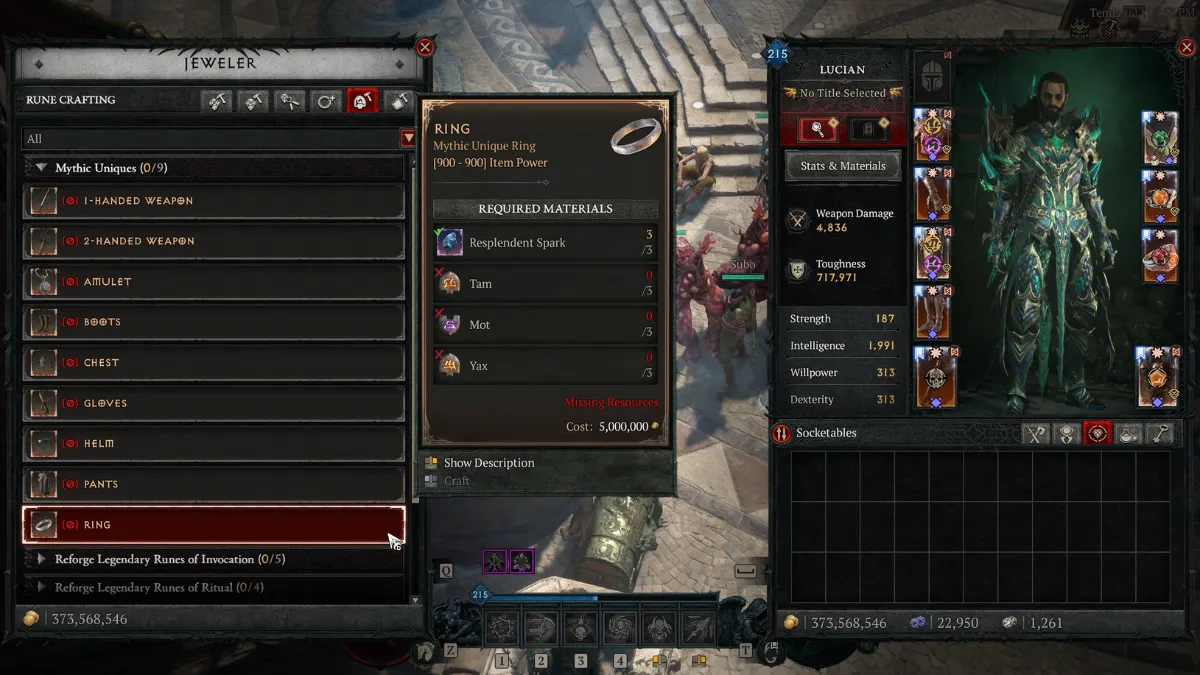
In an undocumented change, all Mythics crafted by either the Jeweler or the Blacksmith are now also tagged as crafted. And since these two methods were the primary sink for Resplendent Sparks, the resulting change had the bizarre outcome of making Sparks, previously the most coveted resource in the game, almost obsolete. You can still craft as many items as you want with Sparks, but your character can only have one equipped at any time.
On top of that, the Jeweler especially was the main way for players to target-craft a specific Mythic Unique. Season 14 nerfed this method, however, so now we can only select an item slot and hope that this NPC gives us the item our build needs.
Ultimately, this system ends up causing way more problems than it solves. It not only removed the value from Resplendent Sparks but also made NPC Mythic crafting almost useless. This resulted in players struggling to make meaningful upgrades in the endgame.
Some players hoped for a compromise by allowing more crafted Mythic Uniques or even abandoning this restriction altogether. The upcoming patch, however, does nothing to resolve these issues.
Lingering Issues With Mythics 3.0
The biggest change introduced in Season 14 is the complete overhaul of Mythic Unique items, dubbed Mythics 3.0. Now, almost every Unique in the game can drop as its Mythic variant.
Mythic Unique items have always posed a big challenge for Blizzard, especially when it comes to balancing the game around them. During Diablo 4’s early days, Mythics, then known as Ubers, were far too rare, and the community was not happy about how time-consuming the grind for these items was. As a result, these items were rebranded as Mythics, with updated visuals and more accessible ways of obtaining them.
This, however, created a different set of issues. Before this season, every single endgame build was using the Heir of Perdition, since its huge bonuses to damage and Critical Strike Chance were too great to ignore. And before S13, Shroud of False Death was infamous for its +1 to Passives property.
When every character uses the exact same items, regardless of the build, class, or how the build plays, it is not good for the health of the game. And this is the exact issue that developers wanted to address with Mythics 3.0.
In theory, this change should increase the longevity of the season and reduce the overdependence on several critical items. In practice, though, this system ended up being a severe overcorrection that introduced several new problems to Diablo 4, making the game much worse.
The main problem is that not every Unique item deserves to be a Mythic. In fact, most probably don’t. Currently, every class in the game has around 50 Unique items to choose from. This includes both generic and class-specific Uniques.
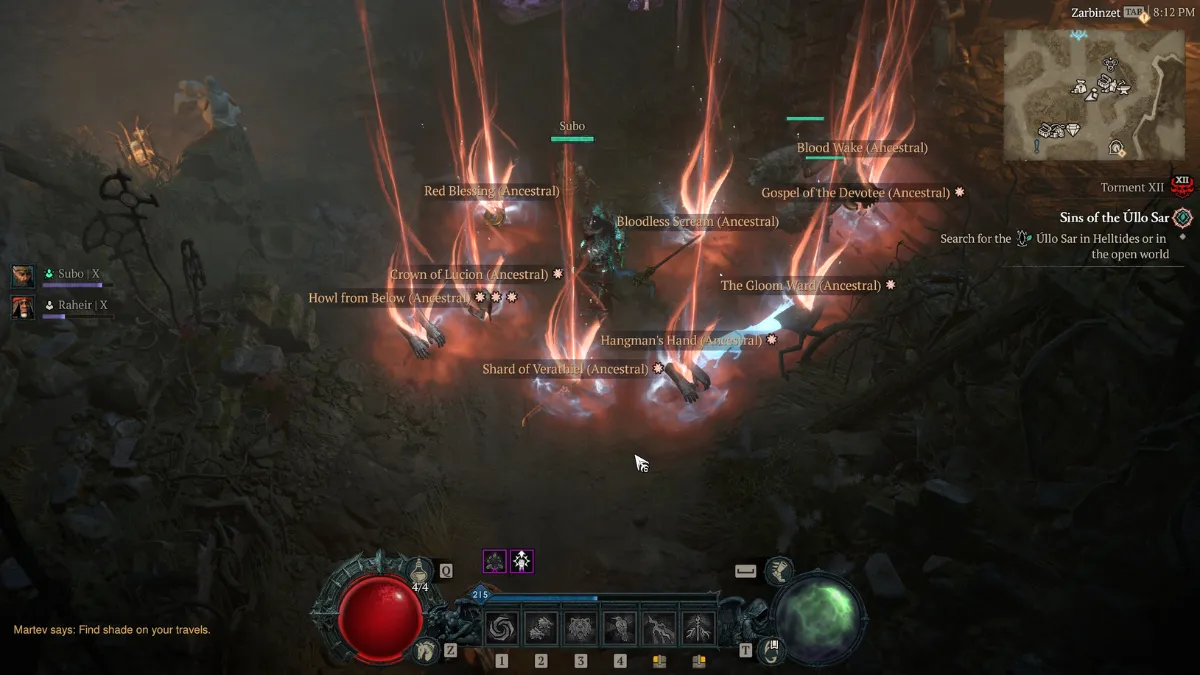
Powerful items like Banished Lord’s Talisman that are class-agnostic and useful for many different builds in the game feel amazing when you get them as a Mythic. On the other hand, farming Lair Bosses for hours only to get a Tassets of the Dawning Sky Mythic drop feels insulting.
And then there’s the issue with Unique items that speak to specific skills, since their usefulness depends almost entirely on the current meta and how viable that skill is in the endgame.
What makes this dilution of the item pool even worse is that Mythic Uniques are now also at the mercy of RNG, with half of their affixes being completely random. This means that you can get an item with a multiplier that your skill cannot use, like physical damage for a lightning build.
Flooding the loot drop table with hundreds of new Mythic items while at the same time gatekeeping how many items players can craft themselves ensures that most players will never get the upgrade they want. The end result of all of this is a system that feels completely unrewarding for everyone.
This is what makes the upcoming patch so disappointing, as it barely scratches the surface and does not address any of these issues in any way. As a result, players are left wondering whether Blizzard even listens or cares.